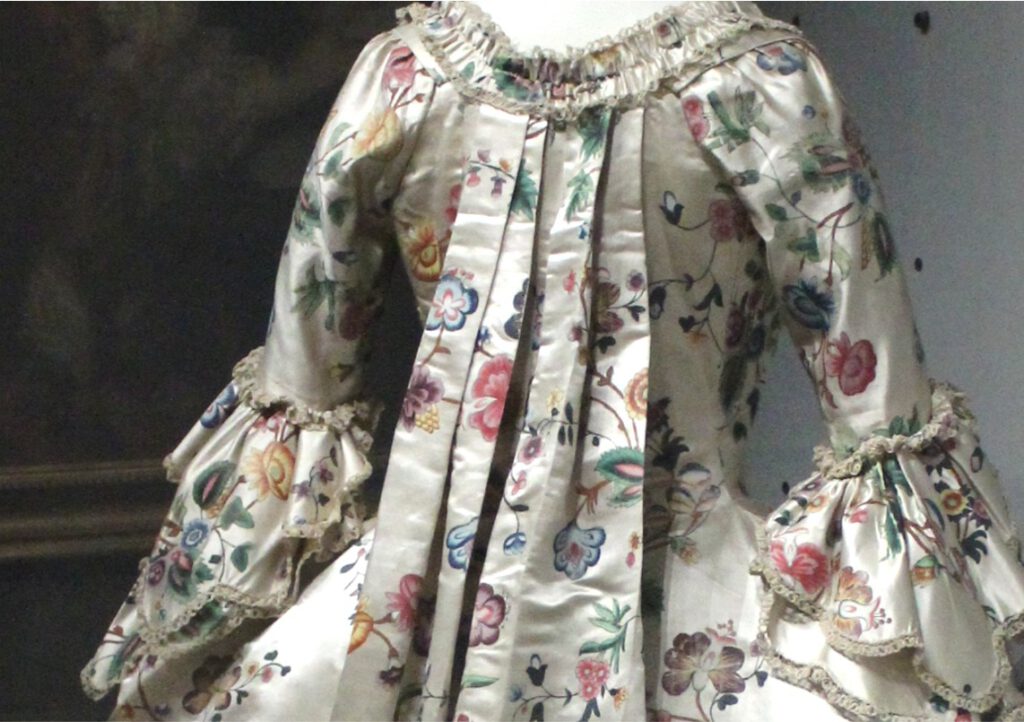
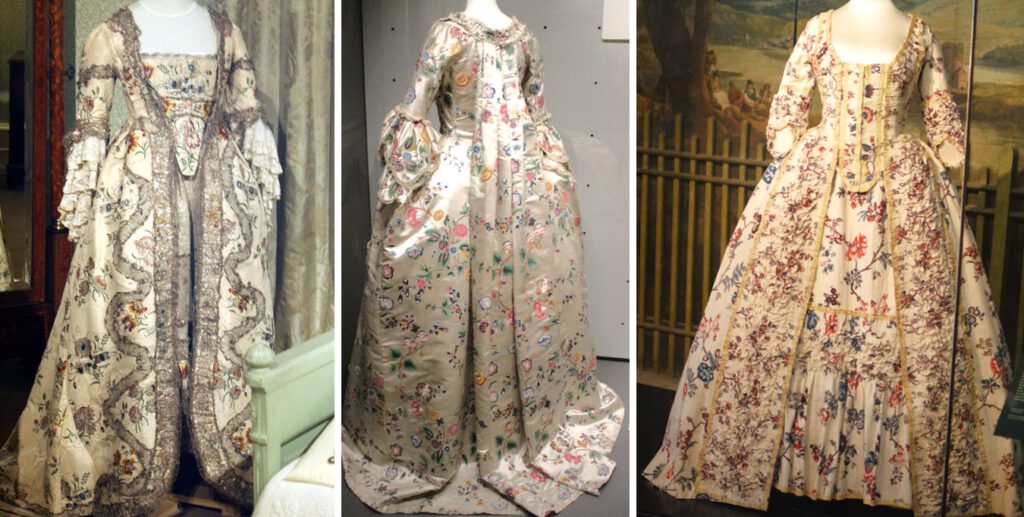
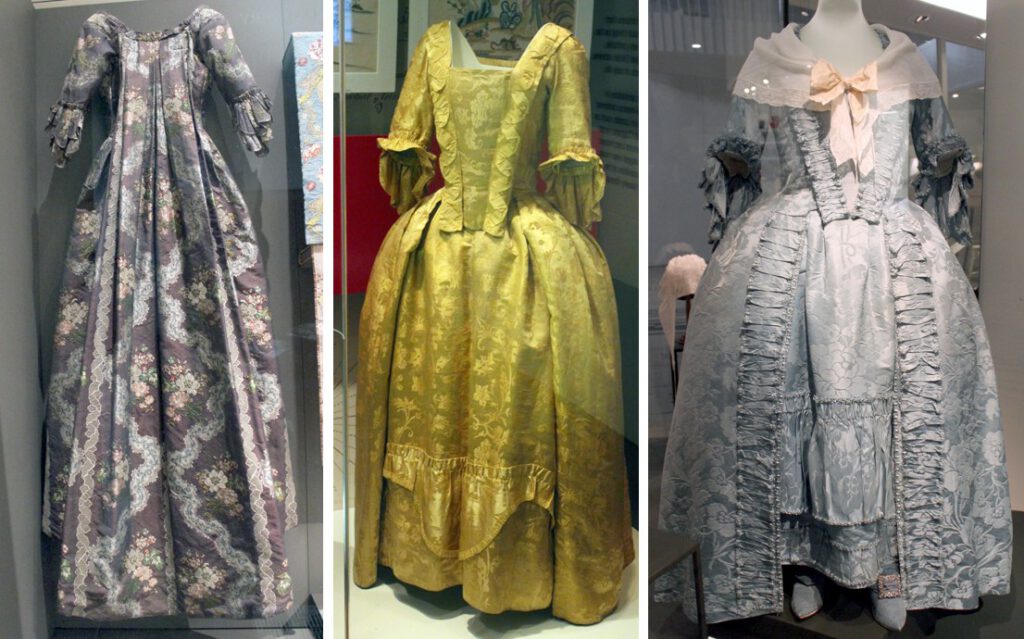
Fashion in the 1740s–1760s is glamorous: For ladies, the must-have item is the robe à la française. This elegant dress with its characteristic back pleats falling from the shoulders to the hem is worn for both formal and informal occasions.
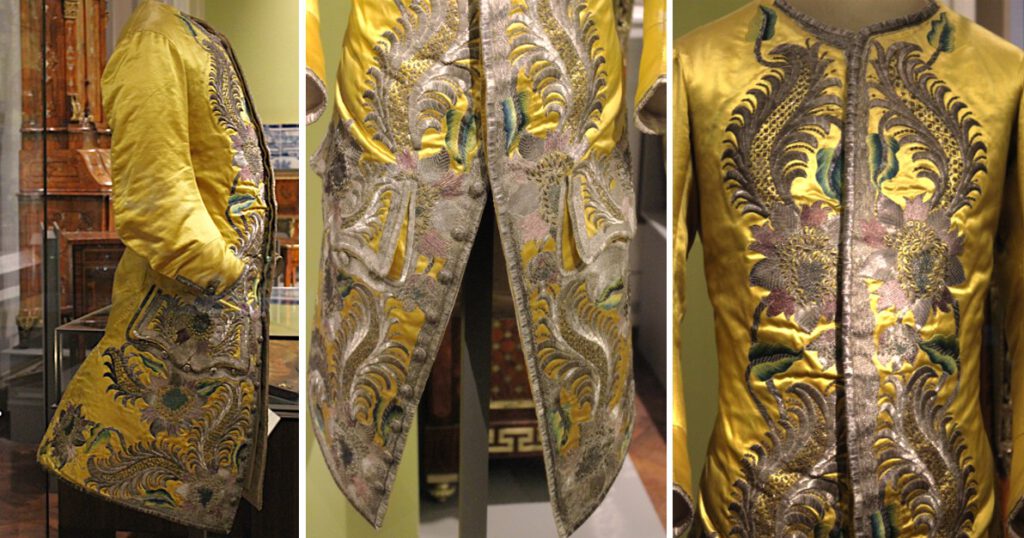
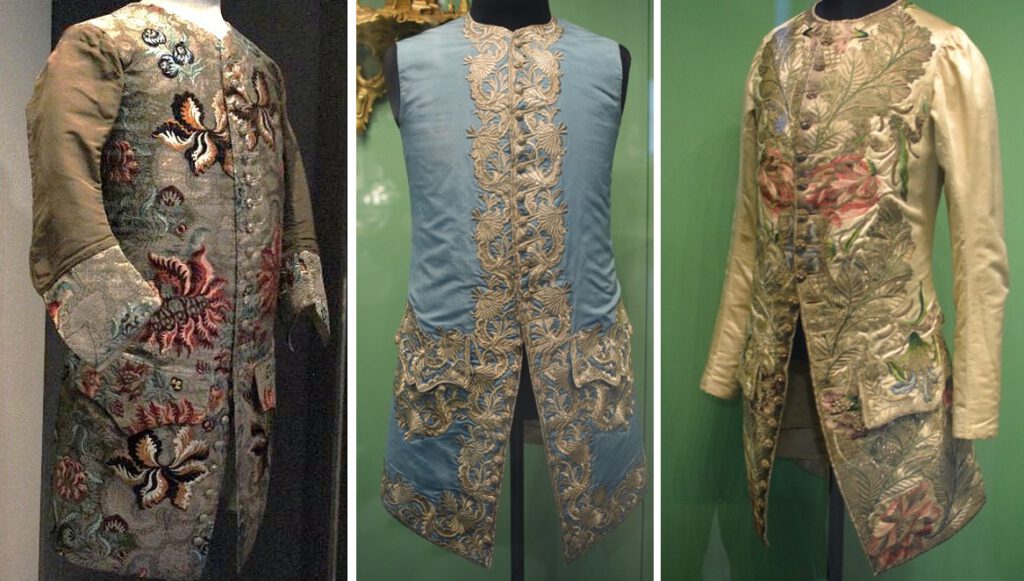
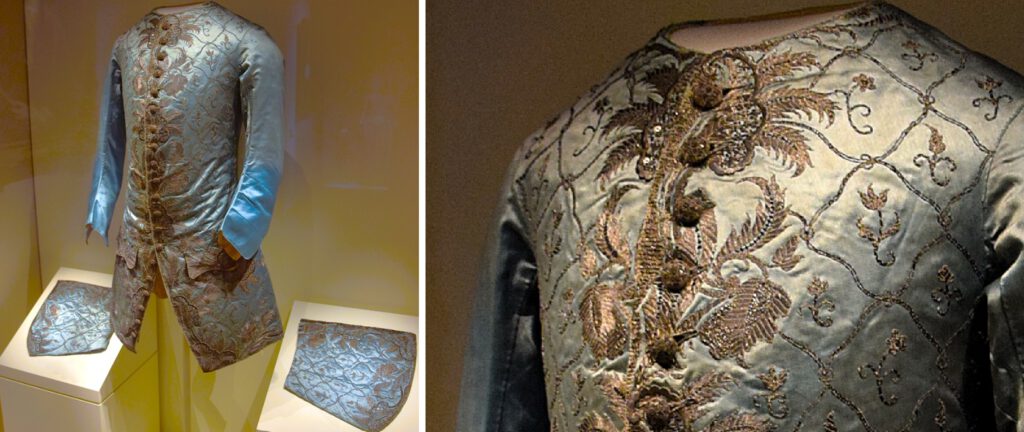
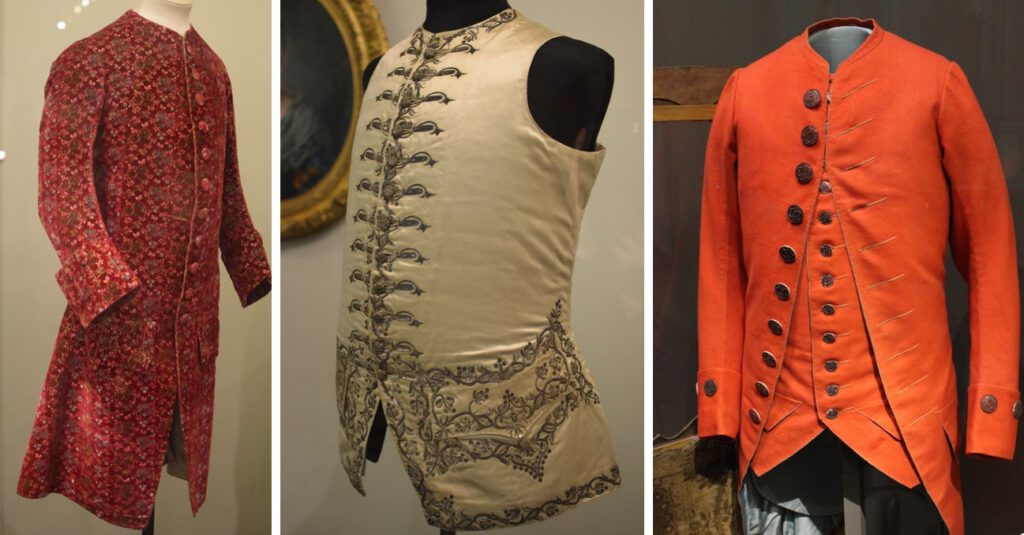
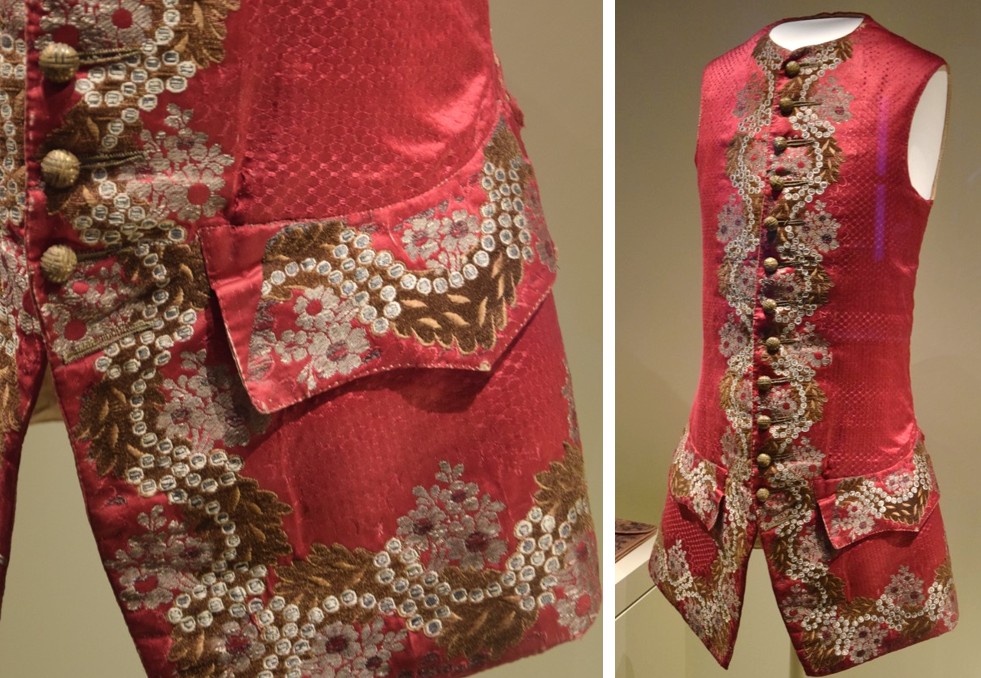
Gentlemen wear a three-piece suit, often richly embroidered. This tried-and-tested outfit was amended gently during the 1740s–1760s to provide a slimmer silhouette and to create a focus on the waistcoat and on the breeches.
Discover fashion for ladies and gentlemen in the period from 1740s-1760s, and scroll down to the large picture gallery.
A classic – revamped
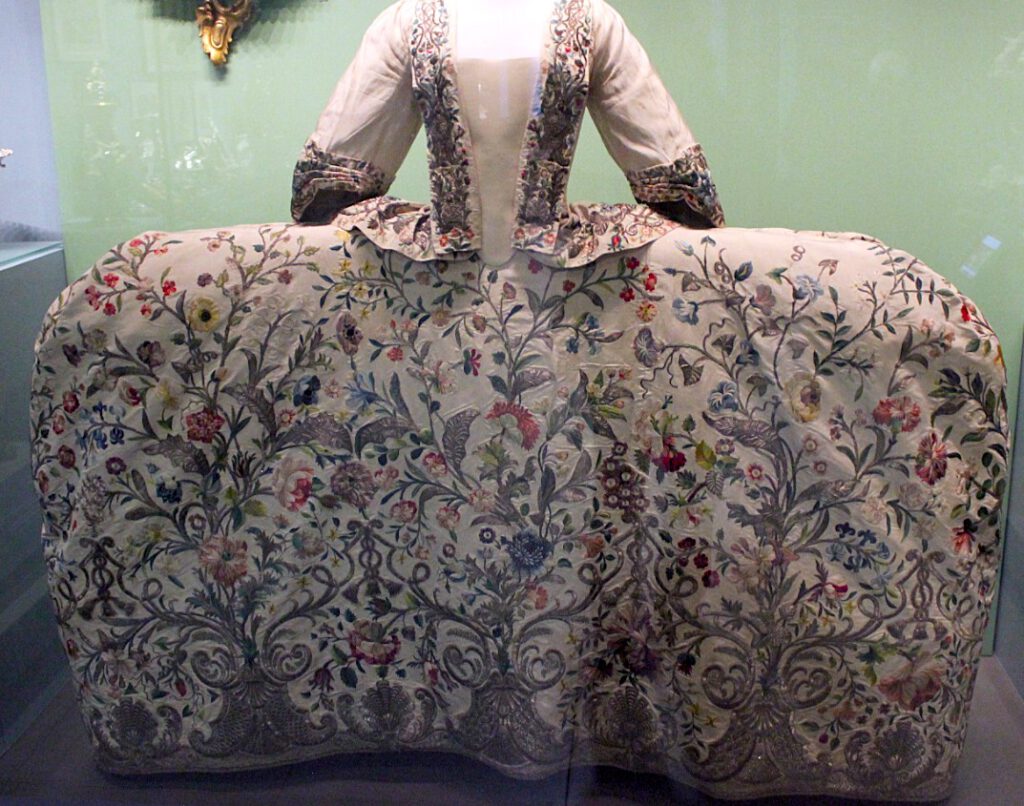
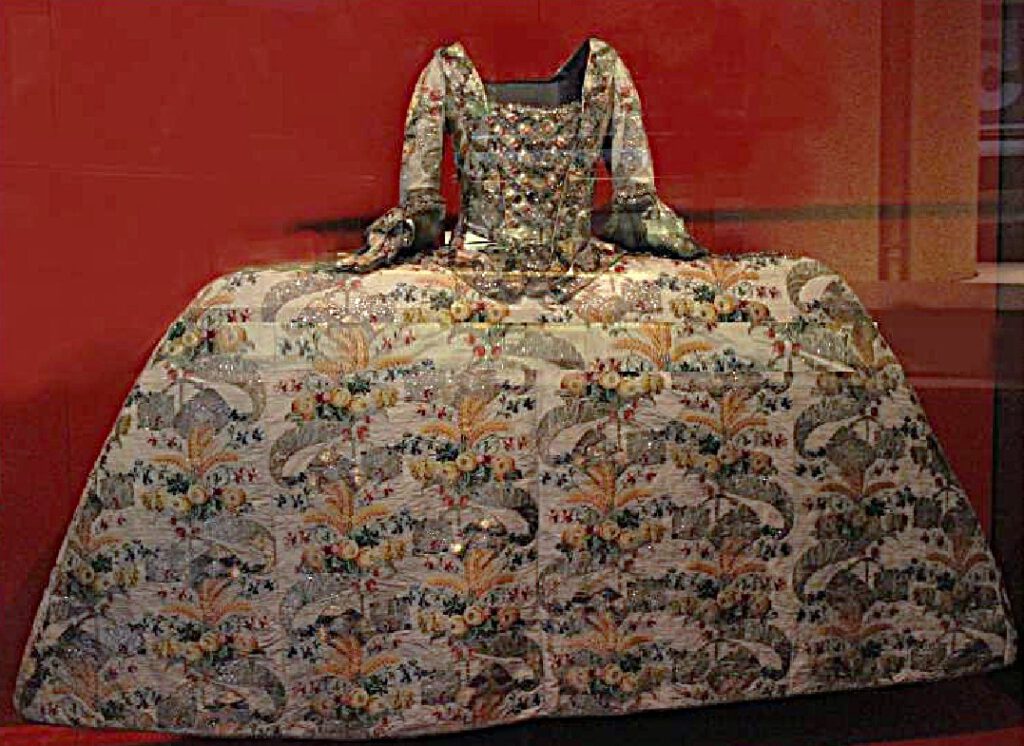
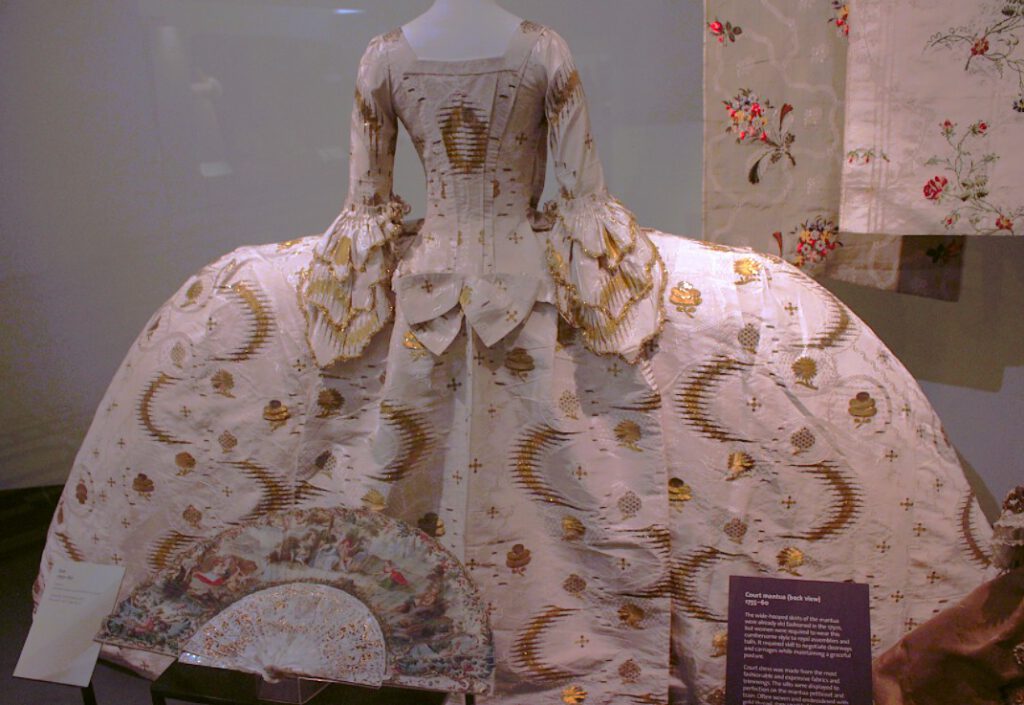
The robe à la française, known in Britain as the ‘sack’, developed from the late Baroque mantua around 1720. As fashion evolved, so did this flowing gown, originally a one-piece garment. By the 1740s:
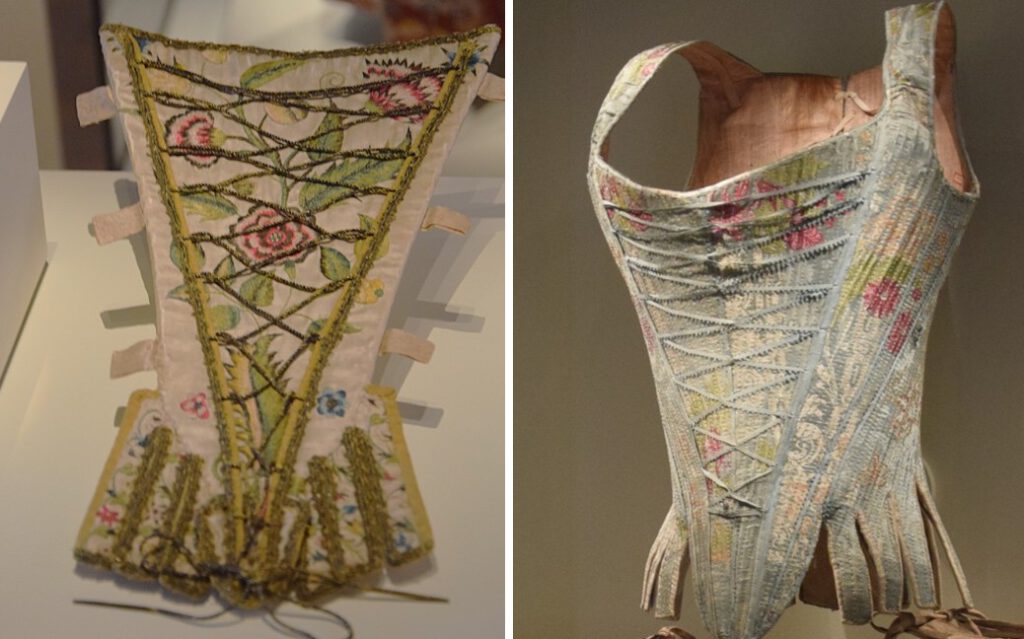
- The bodice was cut separately from the skirt, allowing it to fit more tightly to the body. A corset provided a narrow waist and also pushed up the bust.
- For the sleeves, wing cuffs had dropped out of fashion. Oval sleeve ruffles (engageants) provided an elegant touch.
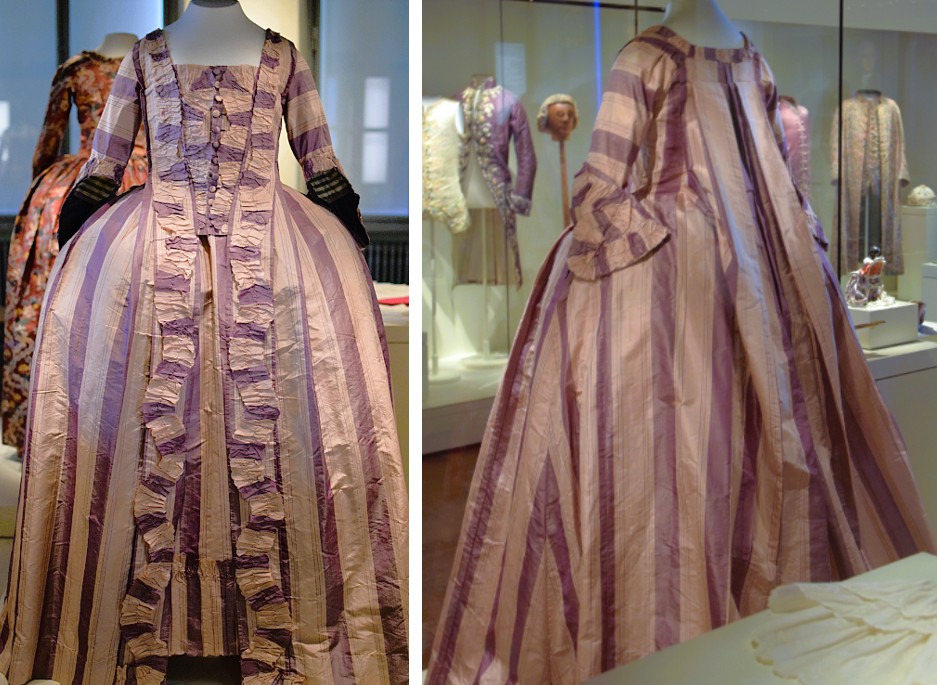
- Three-dimensional trimmings – silk flowers, passementerie and self-fabric – were richly added to the centre-front opening and across the front of the petticoat. Serpentine bands were especially popular.
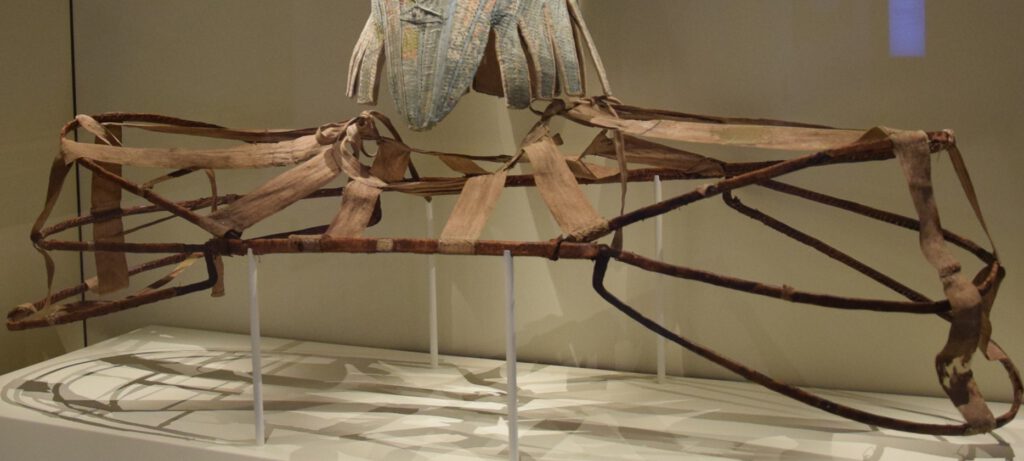
- Wearing paniers (hoops) under the skirt was a must, and they had to be really wide.
- Fabrics became lighter in weight. Cotton-and-linen mixtures were used for everyday dresses. Yet, brocaded silks with complex weave structures continued to be popular especially for formal court dresses
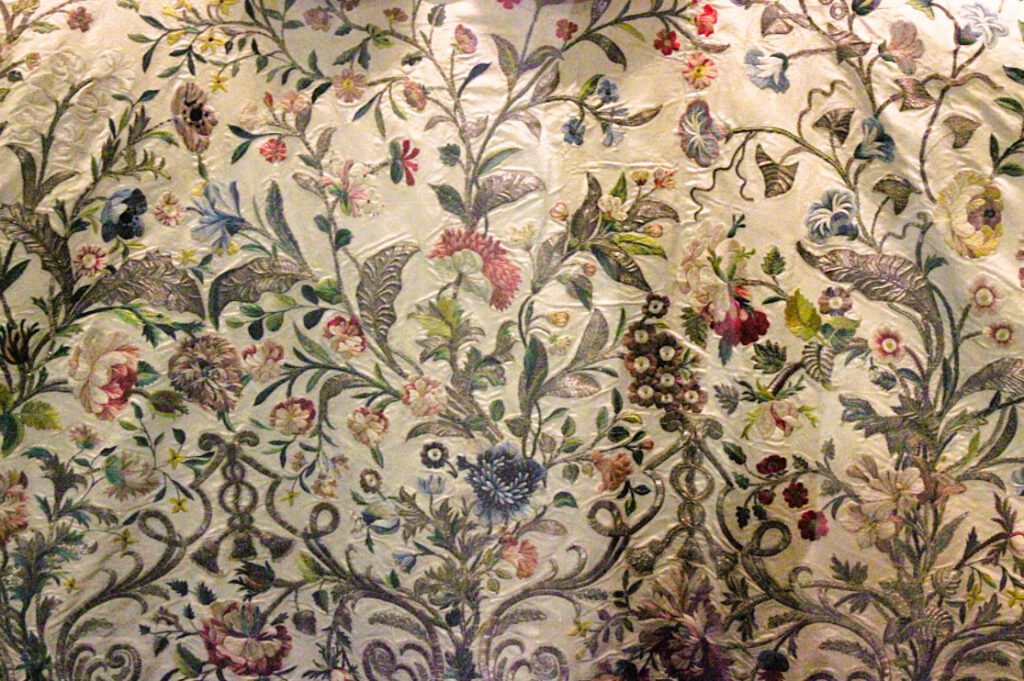
- Fabric designs, once single-coloured with extended repeats or large motifs, became smaller and more natural. With the trend for botany, floral and foliate motifs featured identifiable flowers. The interest in China found an echo in fabrics printed with pagodas and similar imagery.
While the robe à la française is worn in both Britain and France, some details differ.
- French ladies usually prefer dresses with an open overskirt worn with a matching petticoat. The panier is added to the gown during dressing.
- British ladies often wear a sack with the petticoat integral to the dress. The skirt is closed.
Bows, aprons and more options for indoor-wear – the 1750ies
The 1750s put an emphasis on the stomacher, a triangular piece of fabric filling in the front opening of the gown: a true fashionista would decorate it with ribbon bows known as échelle (ladder).
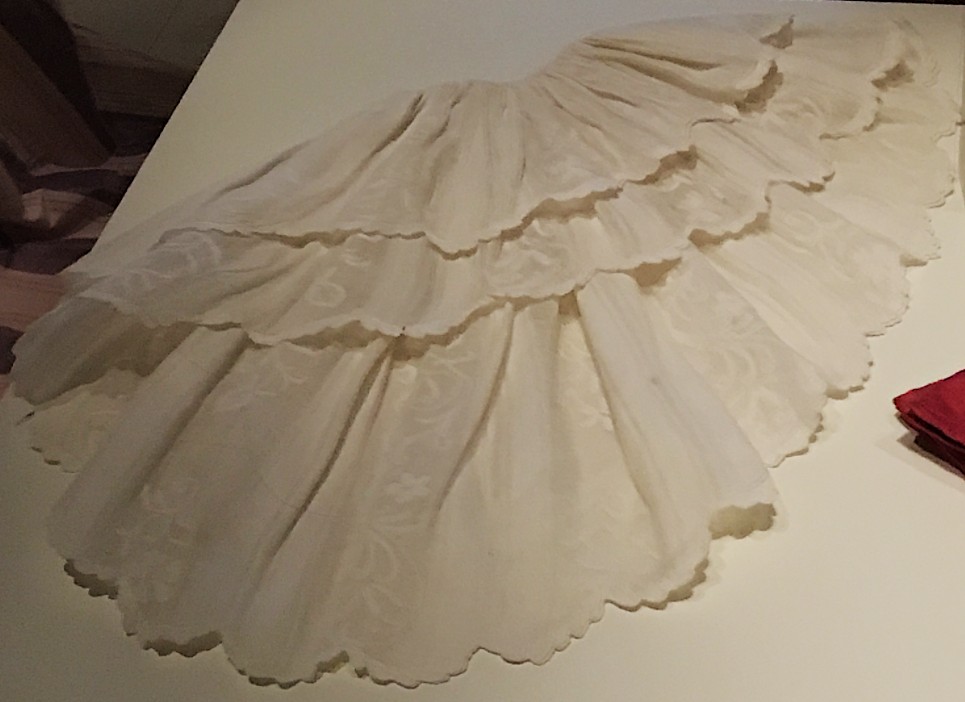
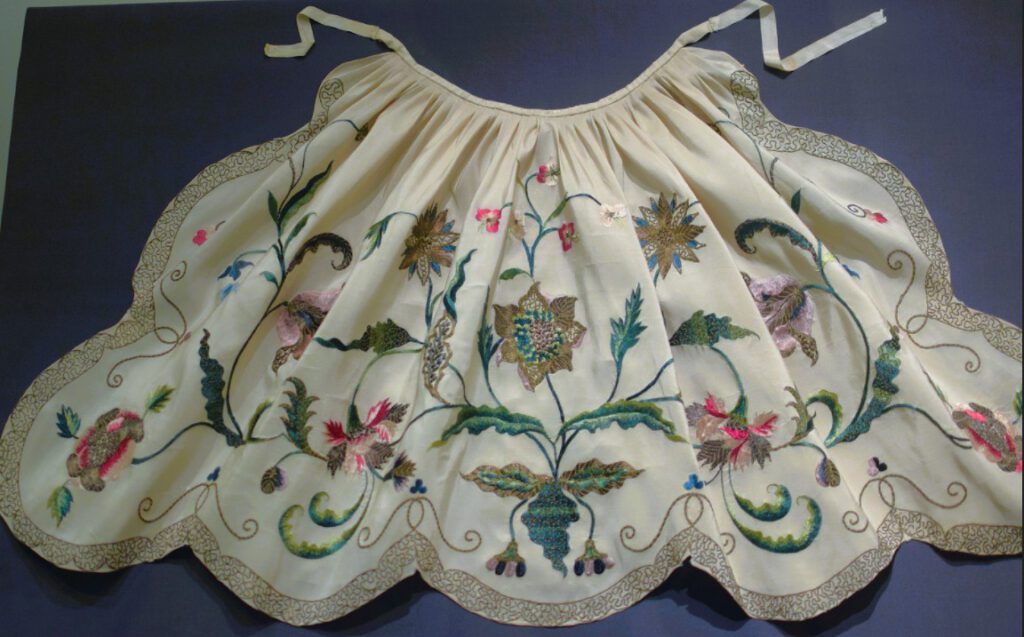
Besides, aprons come into focus. They aren’t a new piece in the wardrobe. They had been the mark of the mistress of the house for some time. Wealthy women now discover their love for mull aprons as accessory to express their style. The caraco, a hip-length jacket bodice, enters the stage as an informal piece for indoor wear or for a stay in the countryside.
Towards a new style – the 1760ies
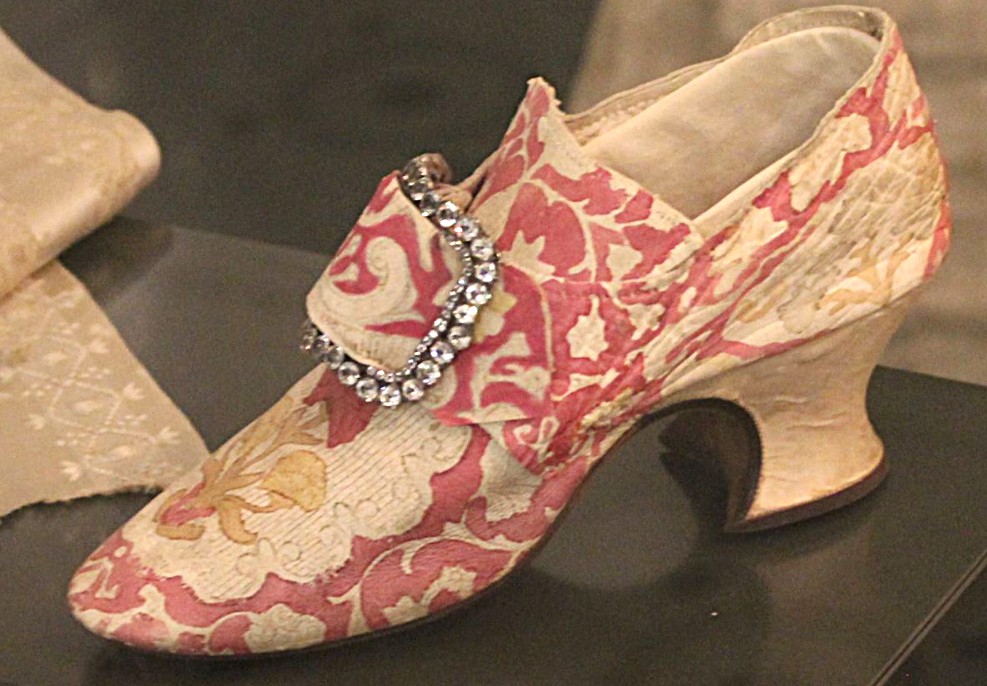
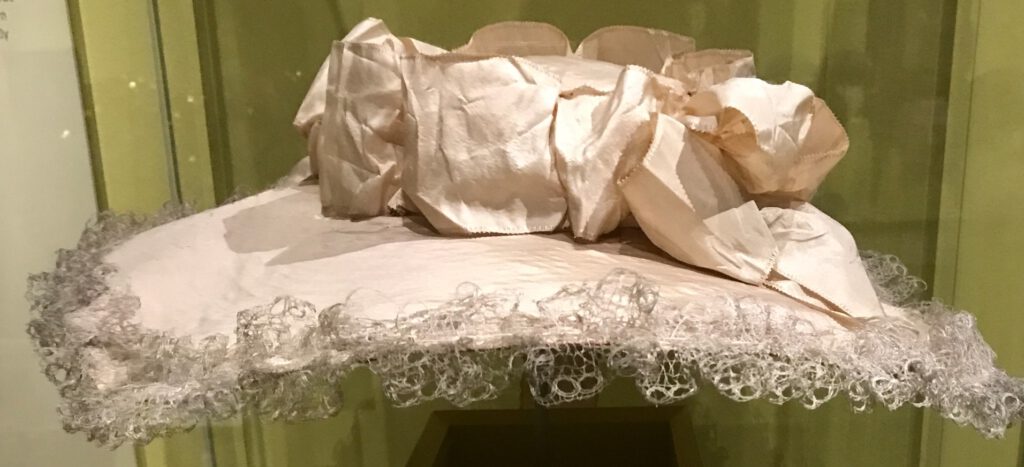
The 1760s brought an explosion of accessories. A fashionable lady required wide-brimmed straw hats decorated with white satin ribbons, a fichu, an apron, engageants, a puffed ribbon collier, and high-heeled shoes with buckles. Must-have jewellery includes multi-strand pearl chokers and large circular pearl earrings. Caps are passé. Hairstylists wave goodbye to hairstyles that curl closely to the head. Now the hair rises at the front of the crown and is decorated with tiny flowers and a small black or white feather on the left side.
As a new piece in the wardrobe, the Brunswick habit offered an option for cloaks and riding habits. Made for being outdoors in a mild climate, it had long sleeves, a comfortable, unstiffened bodice with buttons and closed high at the neck. Just like the robe à la française it was worn with a petticoat and also featured the characteristic pleats, but the length of the pleats was about three-quarters of the sack – well away from any mud.
And what about fashion for gentlemen?
Gentlemen wore a three-piece suit, often of the same fabric and colour: collarless coat, waistcoat, breeches. This tried-and-tested outfit was amended gently between 1740s and 1760s:
- The silhouette became slimmer.
- The skirted coat decreased in volume, and it became shorter at the front.
- The coat fastened over the chest – gone were the buttons that went down to the waist.
The new cut offered a focus on the waistcoat and also on the breeches. As a consequence, fashionable gentlemen began to mix fabrics and colours, especially for the waistcoat.
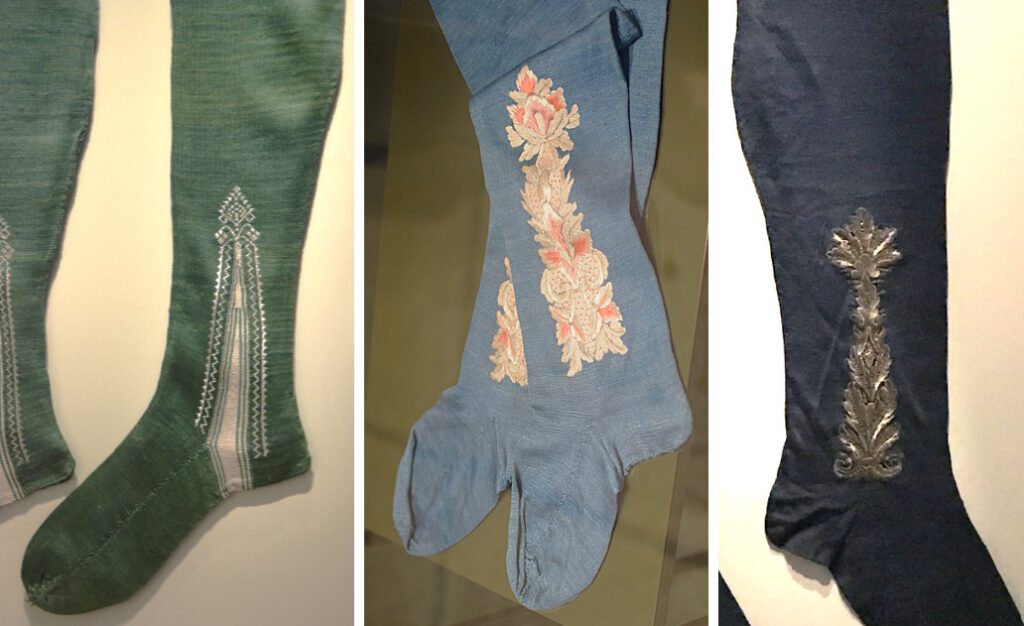
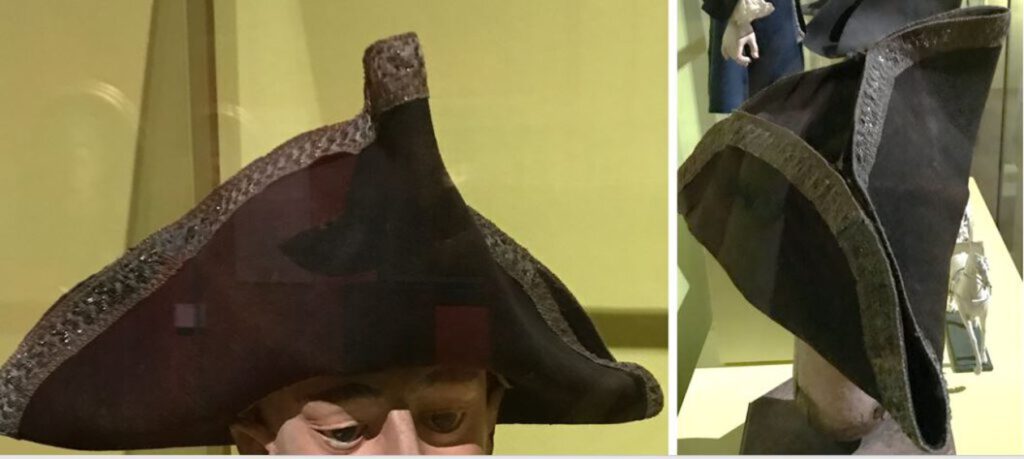
Adventures in fashion stopped at hat-wear: gentlemen would not give up the three-cornered hat. They also continued to wear white linen shorts, silk stockings, and leather shoes with buckles.
However, the 1740s turned out to be a happy period for fans of outdoor activities: British gentlemen adopted the greatcoat of the working-class. From Britain, the greatcoat quickly conquered the wardrobes of the Continent. Even the French, preferring silks and colours for their suits and thus frowned upon the much more sober British style, fell in love with this comfortable weather protective garment.
The Fashion Gallery
I have compiled a selection of photos for you, arranged to show the historical fashion items in chronological order in each section. Enjoy the beautiful garments!
Ladies, 1740s – 1760s
Accessories
Court dresses
Gentlemen, 1740s – 1760s
Related articles
Sources
- Bayerisches Nationalmuseum, Prinzregentenstraße 3, 80538 Munich, Germany
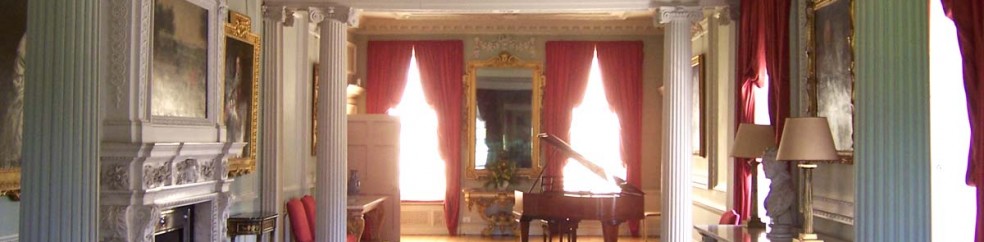
- Berrington Hall near Leominster HR6 0DW, UK
- Dr. Nina Moeller: Rococo (ca. 1715 – 1780) at: Epochs of Fashion https://www.epochs-of-fashion.com/the-epochs/rococo/
- Michele Majer: 1740-1749 at: Fashion History Timeline (https://fashionhistory.fitnyc.edu/1740-1749/)
- Michele Majer: 1750-1759 at: Fashion History Timeline (https://fashionhistory.fitnyc.edu/1750-1759/)
- Michele Majer: 1760-1769 at: Fashion History Timeline (https://fashionhistory.fitnyc.edu/1760-1769/)
- Museum of London, London, UK
- V & A Museum, Cromwell Road, London, SW7 2RL, UK
Article by Anna M. Thane, author of the novel
“Von tadellosem Ruf” (http://amzn.to/2TXvrez)