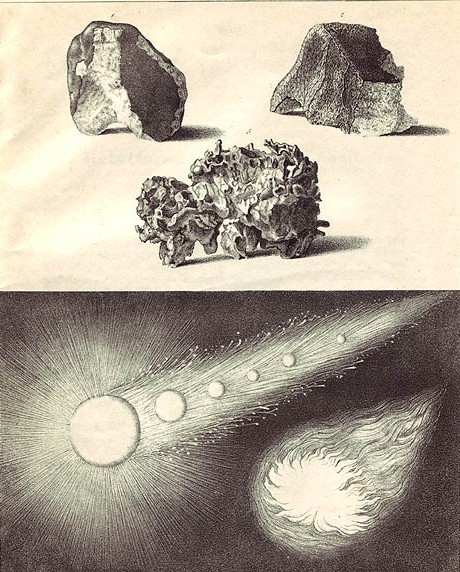
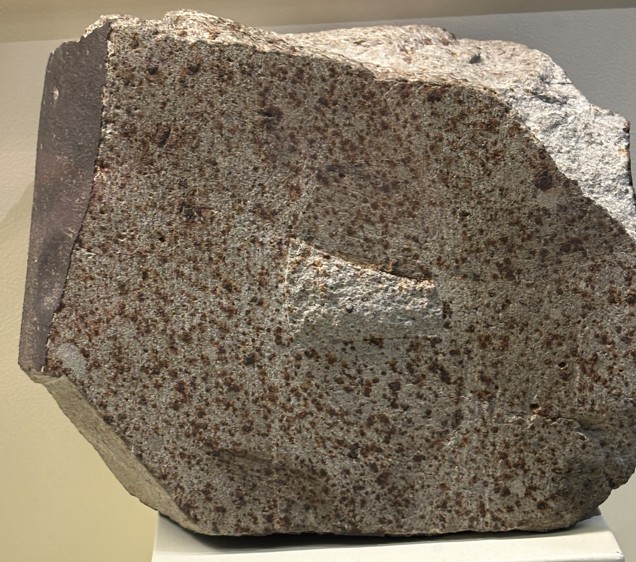
It’s 3 October 1815, around 8:30 a.m. A noise like musket shots and heavy cannon fire startles the inhabitants of the village of Chassigny / France. Is it Napoleon being back – again? A farmer out in his vineyard is the first to know that the noise has nothing to do with war. Scanning the horizons, he sees a grey cloud in a north-easterly direction. And then, with a whistling sound, an opaque object shoots down from the sky, landing about 400 m away from him. He rushes over. Little did he know that he was among the first persons to have found a meteorite from Mars.
Smoke rises from the object – a stone, now broken into fragments. It has struck a crater of about 0.60 metres in diameter. The fragments appear to be of a peculiar nature. The farmer – whose name is unfortunately lost – picks one up and finds ‘it warm as if it had been exposed to strong sunlight’. Did he remember at this moment that twelve years earlier, a meteorite shower of more than 3,000 fragments fell upon the town of L’Aigle in Normandy? We don’t know, but the farmer knows he had found something of importance. He hastens back to Chassigny to share his findings. The villagers set out to collect as many of the fragments as possible.
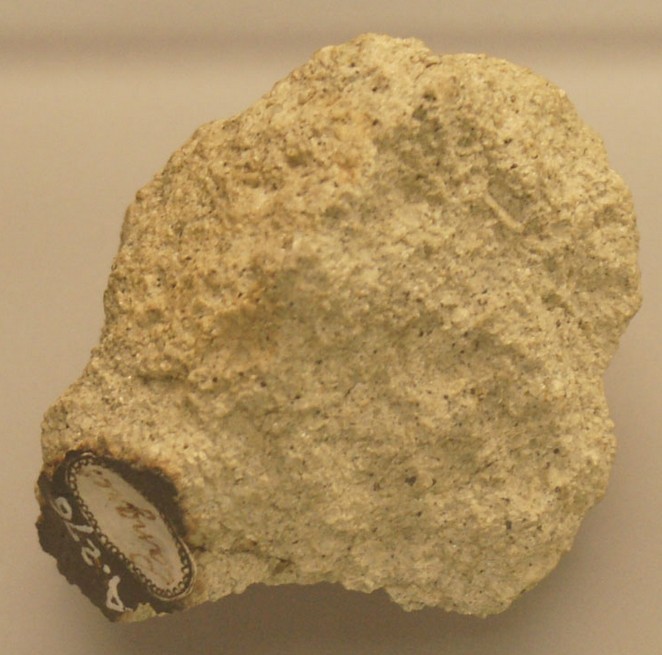

Good luck brings to the village, two days later, Monsieur Gabriel Pistollet de Saint-Fergeux (1775–1863), a doctor and amateur geologist. He came over from Langres, the administrative centre of the area. Of course, he is told of the mysterious findings. Monsieur Pistollet is thrilled: he knows a bit about aerolites – or meteorites, as these objects have been called since the occurrences in Normandy in 1803. The farmer leads him to Chemin de sous Prêle, the finding place of the mysterious stone.
Monsieur Pistollet is in his element: he quickly recognises the object as a meteorite, as he already owns one of these rare stones in his collection, given to him by someone in Germany. Pistollet conducts a full investigation, gathers all fragments (about 4 kg in all) and then contacts the Académie des sciences in Paris. There, one of the leading experts on meteorites of the time takes over: Louis-Nicolas Vauquelin (1763–1829). He has been studying aerolites for a long time and had been on the team that investigated the meteorite shower in Normandy in 1803. It is from their research that stones falling from the sky were fully accepted as meteorites, according to the theory of Ernst Chladni, who, in 1794, suggested that such objects were from outer space.
Analysing a meteorite in 1816 – and tasting it
Vauquelin conducts several experiments, from weighing the stone, listening to its sounds, reducing fragments to a fine powder to experiments with sulfuric Acid. He even tastes the meteorite (“had the bitter taste characteristic of natural magnesium sulfate”). Vauquelin confirms that this stone is from outer space. However: it is unique. He writes:
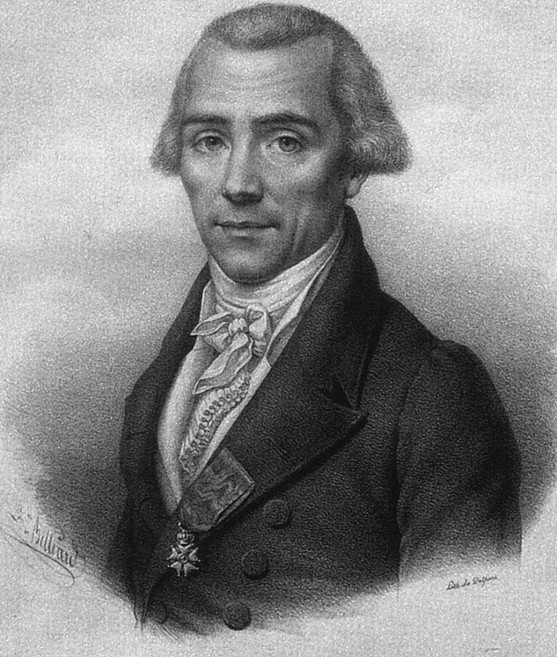
‘It was interesting to investigate the nature of the portion of the meteorite that refused to dissolve in sulfuric acid; it must necessarily be of a different nature from that which had dissolved.’ Unlike the other meteorites that are known … (the) ‘stone contains neither sulfur nor nickel, and that the iron is entirely oxidized, whereas all other aerolites contain these two substances and the iron is generally found in the metallic state, at least in large part (…) there is twice as much magnesia in our stone as in those previously analyzed (… ) the quantity of this metal (chrome) is also greater than usual. (…) The absence of nickel is all the more remarkable in the Langres stone, since this metal has, I believe, consistently appeared in all others.
Louis-Nicolas Vauquelin: Analyse de l’aérolite tombé aux environs de Langres, et envoyé à l’Institut par M. Pistollet. In: Annales de chimie et de physique, Paris, 1816, vol. 1, p. 49–54.
Vauquelin is correct. He certainly would have been pleased to know what could only be established about 170 years later: the Chassigny meteorite had come from Mars – probably from its Kotka crater. Thus, Vauquelin most likely was the first person ever to have tasted a piece of Mars
Meteorites of the 18th century
Meteorites aren’t very rare, but one has to notice them to find them. In the 18th century, a few findings – though none of them from Mars – were important for the young research field of geology:
- In 1749, Peter Simon Pallas (1741–1811) found a curious iron stone in Siberia. It had a mass of 680 kg. It is today known as a stony-iron meteorite. In 1794, based on his research on the Pallas meteorite, Ernst Florens Friedrich Chladni (1756–1827) published his book: On the Origin of the Iron Masses Found by Pallas and Others Similar to It, and on Some Associated Natural Phenomena. He proposed that meteorites have an extraterrestrial origin. The scientific community found it amusing, but unconvincing.
- On 20 November 1768, a meteorite fell from the sky near the village of Mauerkirchen, at that time part of Bavaria. It landed in the fields of farmer Georg Bart and was found by his wife, Apollonia Bart. It was of a bluish colour and weighed about 21 kg.
- 1795: The Wold Cottage meteorite fell near Wold Cottage farm in Yorkshire, England, at around 3 o’clock on 13 December 1795. It nearly hit ploughman John Shipley. As in Chassigny, the stone was warm and smoking. Major Edward Topham, the owner of the land, publicised the finding. The stone was exhibited in a museum in a room at the rear of the residence owned by naturalist James Sowerby. A piece of the stone was given to Edward Charles Howard FRS (1774–1816). He and the French mineralogist Jacques de Bournon, who worked with Howard, carefully analysed its composition and concluded that an extraterrestrial origin was likely. In 1802, Howard read a paper in front of the Royal Society. It was the first time that scientists accepted the existence of meteorites.
- In the early afternoon of 26 April 1803, a meteorite shower of more than 3,000 fragments fell upon the town of L’Aigle in Normandy, France. The L’Aigle event was a milestone in the understanding of meteorites, ending a long debate about their extraterrestrial origin.
Related articles
Sources
- M. Pistollet: Relation de la chuted’une pierre météorique tombée dans les environs de Langres communiquée à M.Virey par M. Pistollet, médecin de la même ville in: Annales de chimie et de physique, Paris, 1816, vol 1, p. 45-48; 12148/bpt6k6570847h gallica.bnf.fr
- Louis-Nicolas Vauquelin: Analyse de l’aérolite tombé aux environs de Langres, et envoyé à l’Institut par M. Pistollet, in: Annales de chimie et de physique, Paris, 1816, vol 1, p. 49–54; 12148/bpt6k6570847h gallica.bnf.fr)
- Sean B. Palmer: “Lo and Behold!” inamidst.com, 200,7 at: http://inamidst.com/lo/aerolites
- Bernard Tournois (Association Chassigny 1815-2015): Gabriel Pistollet de Saint Fergeux (1775-1863), at: https://chassigny18152015.wixsite.com/lesite/gabriel-pistollet-de-saint-fergeux
- https://de.wikipedia.org/wiki/Marsmeteorit
- https://de.wikipedia.org/wiki/L%E2%80%99Aigle_(Meteorit)
- https://de.wikipedia.org/wiki/Peter_Simon_Pallas
- https://en.wikipedia.org/wiki/Ernst_Chladni
- https://de.wikipedia.org/wiki/Liste_von_Meteoriten
- Museum Mineralogia Munich, Theresienstraße 39, 80333 München
Article by Anna M. Thane, author of the novel
“Von tadellosem Ruf” (http://amzn.to/2TXvrez)