No, neither Jane Austen nor the Duke of Wellington ever owned a nativity scene. These charming displays were very much a Catholic tradition, flourishing in 18th-century Italy, Spain, Austria and Germany. British Protestants, on the other hand, tended to raise an eyebrow at such things. Nevertheless, British diplomats, statesmen and aristocrats on their Grand Tour would see nativity scenes while staying on the Continent. Travelling through Catholic Europe, they encountered an unexpected passion among the courts: collecting nativity figurines. In Italy and Spain, this was considered a royal pastime. Princesses and court ladies even contributed hand-made trinkets and exquisite little dresses for the figurines.
To show you the splendour of the tradition, I’ve gathered photos of a magnificent mid-18th-century Neapolitan nativity scene—an astonishing world of miniature fashion and historical flair.
These photos were taken at the Bayerisches Nationalmuseum in Munich, home to one of the largest collections of 18th-century Neapolitan nativity figures. The pieces once belonged to the royal house of Bourbon-Sicily and were generously donated to the museum in 1904.
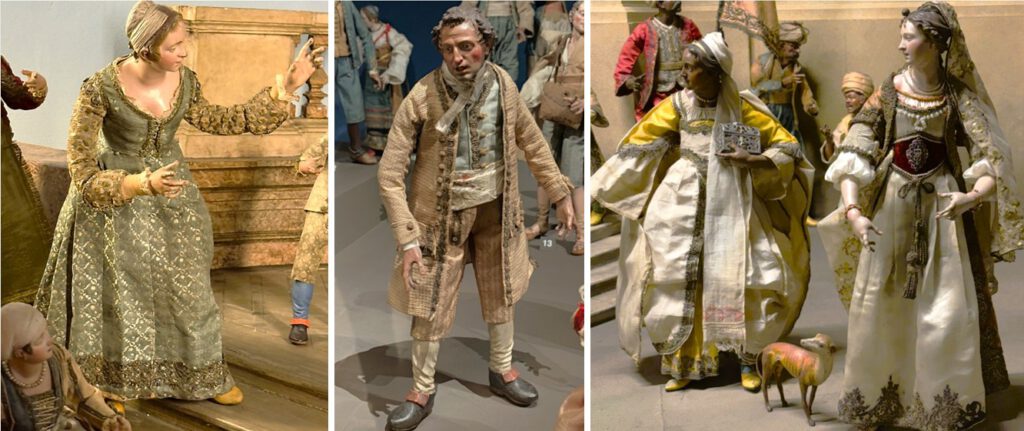
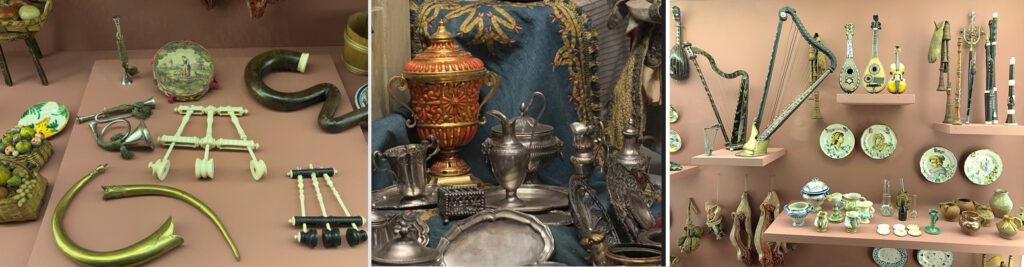
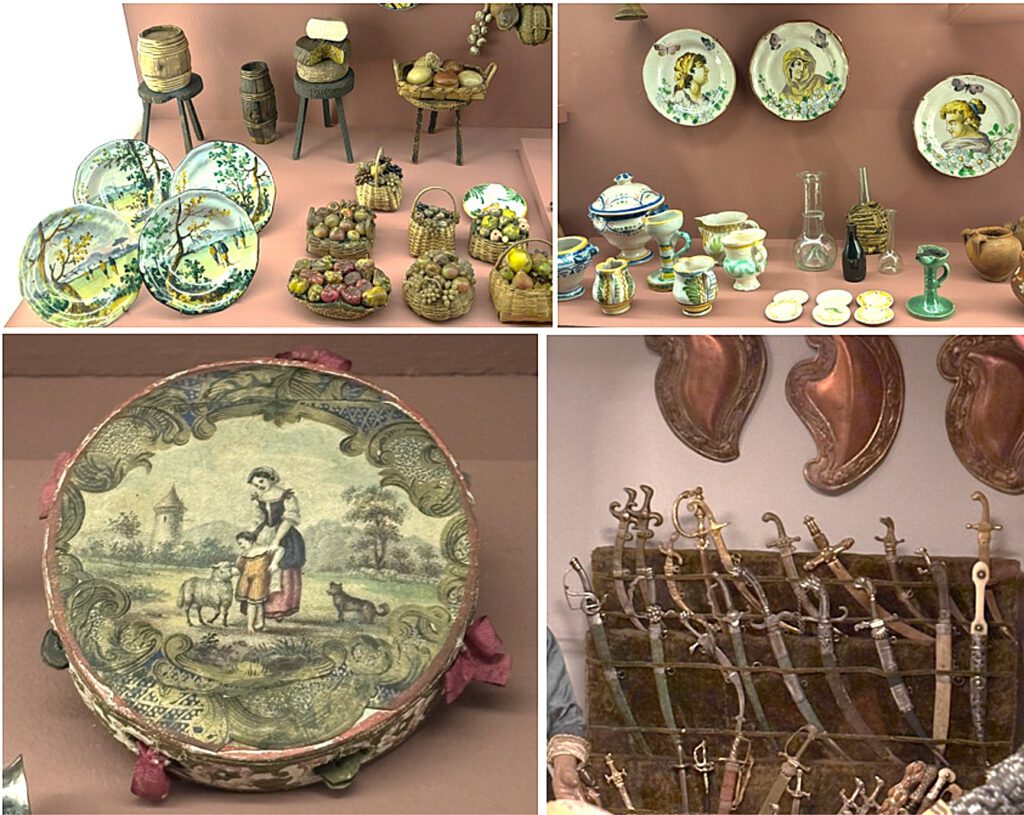
This is not your standard mantelpiece nativity. Think of it more as a snapshot of courtly life in the mid-18th century. The display stretches across two rooms, sacred scenes preceded by everyday stories featuring innkeepers, shoemakers, taverners and vagabonds. And the accessories alone—tiny pots, pans, food, armoury and treasures of all kinds —could give Barbie’s wardrobe a run for its money.
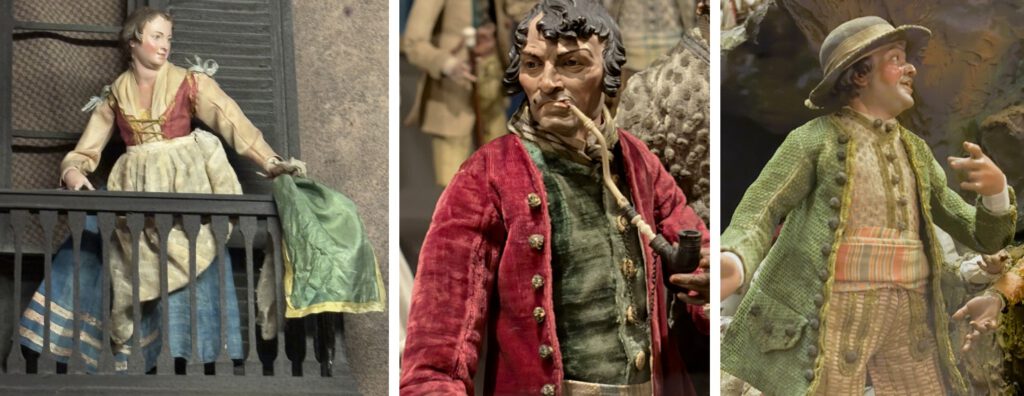
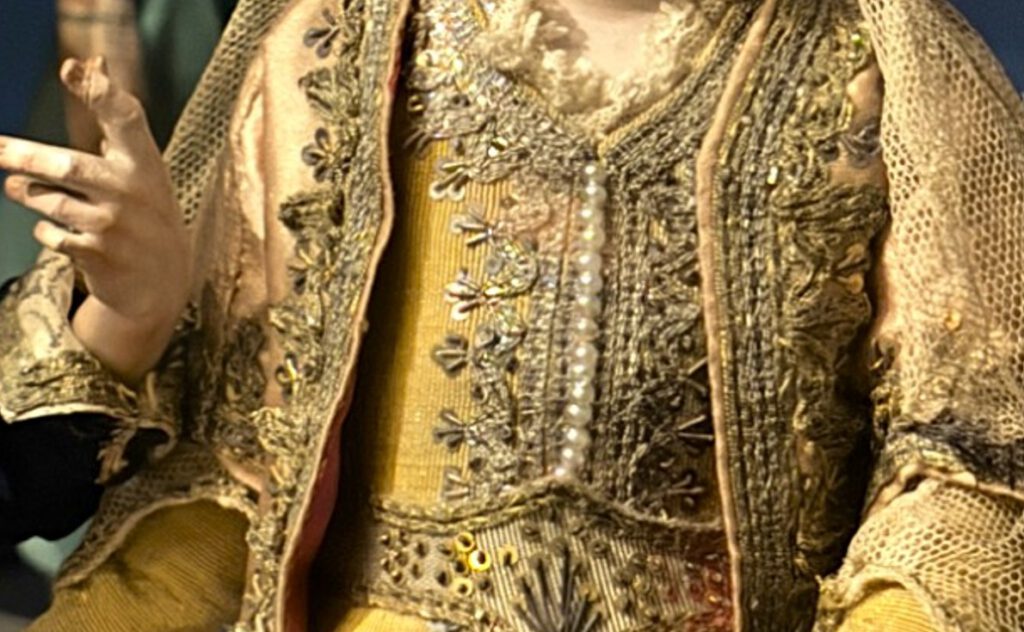
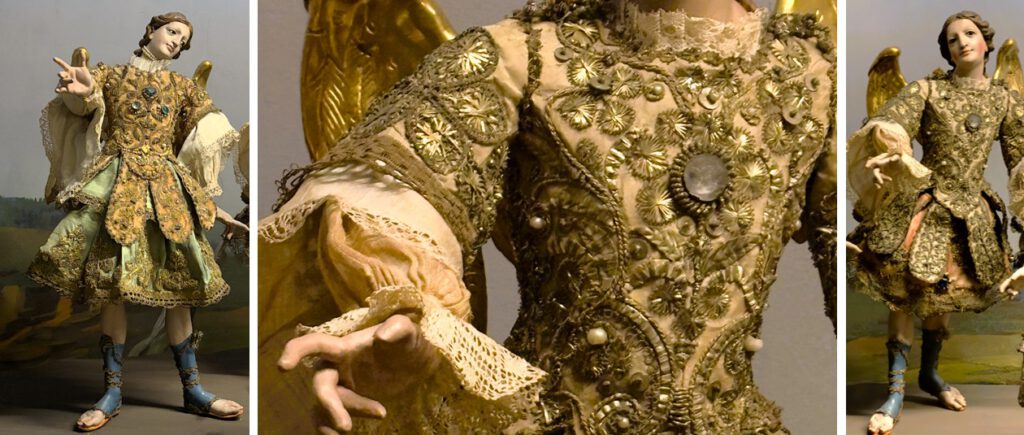
The figurines themselves are carefully dressed. Every outfit signals a place on the social ladder, from the humblest shepherd to the most distinguished courtier. For the latter, the attire is lavish: silk fabrics, sparkling accessories and minute embroidery that would delight any lover of folklore or 18th-century fashion.
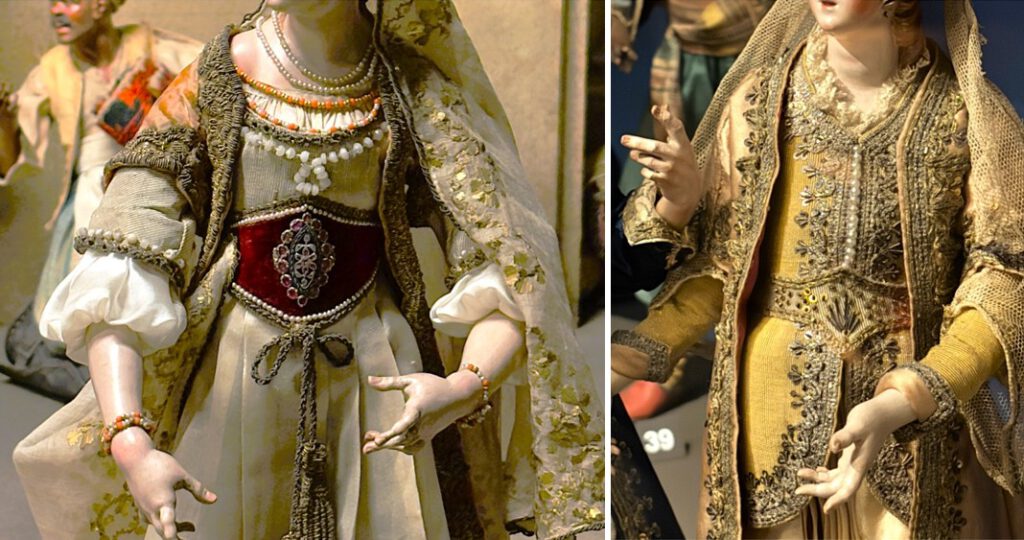
Craftsmanship was paramount. The most important figures were sculpted in terracotta; others had clay heads and limbs. Equipment—from baskets to tools—was crafted using wire and oakum, all with an artisan’s touch.
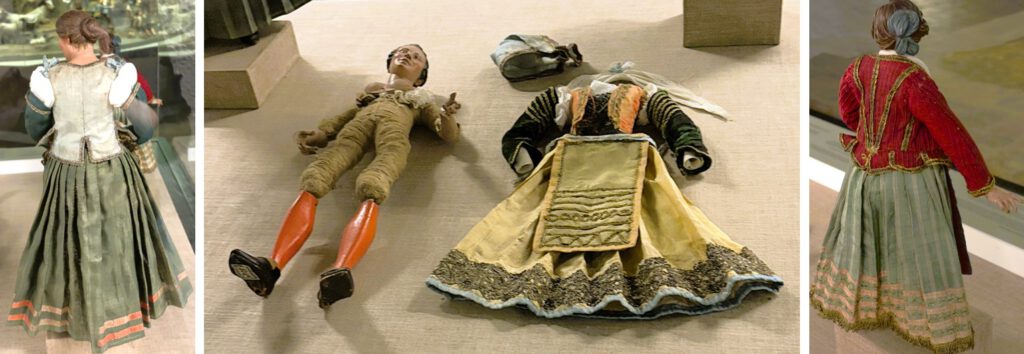
While families of all classes have been setting up nativity scenes for centuries, the Neapolitan nativity blossomed in the 18th century. King Charles III of Bourbon became an avid collector, and later Francesco I Gennaro (1777–1830) and Ferdinand II (1810–1859) carried on the tradition. Spain soon followed suit: Spanish aristocrats, eager to emulate the royal family, ordered unique pieces from Neapolitan sculptors and proudly displayed their own elaborate scenes each Christmas. It was very much the Christmas-themed doll’s-house craze of its time.
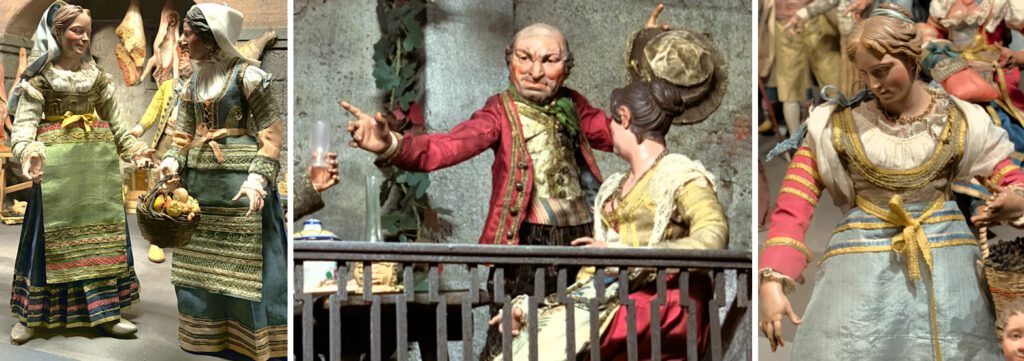
Naples was the beating heart of nativity-scene production, with Via San Gregorio Armeno serving as the go-to street for figurine shopping. Famous Neapolitan artists contributed to the making of the Nativity scene, among them Giuseppe Sammartino, the leading Neapolitan eighteenth-century sculpture, Angelo Viva, Lorenzo Mosca, Salvatore Franco, Giuseppe Gori, Francesco and Camillo Celebrano and Matteo Bottigliero. Artists took turns in setting up the Nativity scene at the Bourbon-Sicily-court.
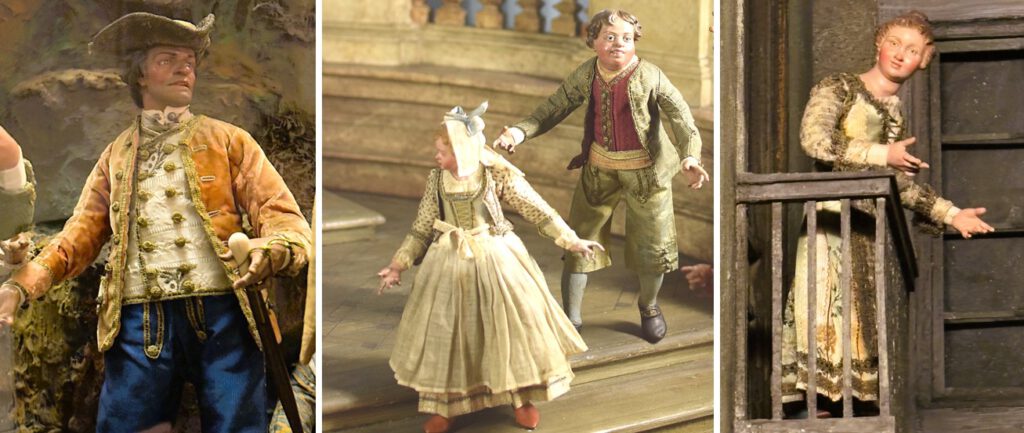
By the end of the 18th century, however, Enlightenment ideas pushed these grand displays out of fashion. Many nativity scenes were banned or destroyed, while others survived only thanks to the dedication of believers and passionate collectors.
Today, these historic displays offer not just a glimpse of faith, but a fascinating window into the elegance, artistry and everyday life of the 18th century—captured in miniature, and dressed to impress.
Related articles
Sources
- Bayerisches Nationalmuseum, Prinzregentenstraße 3, 80538 Munich / Germany
- Digital history and cultural heritage: “Via San Gregorio Armeno and the Neapolitan Nativity scene” (https://digitalhistory.unite.it/en/territories/international-routes/nativity-scenes/via-san-gregorio-armeno-and-the-neapolitan-nativity-scene/)
- Digital history and cultural heritage: “Charles III of Spain and his passion for the Neapolitan Nativity scene” (https://digitalhistory.unite.it/en/territories/international-routes/nativity-scenes/charles-iii-of-spain-and-his-passion-for-the-neapolitan-nativity-scene/)
- Digital history and cultural heritage: Neapolitan Nativity scenes of the Spanish nobility (https://digitalhistory.unite.it/en/territories/international-routes/nativity-scenes/neapolitan-nativity-scenes-of-the-spanish-nobility-i/)
- The Neapolitan textile tradition and the silk factory of San Leucio , at: Napoliartigianatoartistico.com
- www.wikipedia.org
Article by Anna M. Thane, author of the novel
“Von tadellosem Ruf” (http://amzn.to/2TXvrez)