I am delighted to have Sue Wilkes, acclaimed author of several social history books and family history guides, as guest writer at Regency Explorer. In her newest book, Regency Spies, Sue explores the secret histories of Britain’s rebels, radicals and revolutionaries during the Regency period. It’s a treat for me to present Sue’s insightful post about spies and revolutionaries’ secret means of communication:
Shoe, Code & Coach: Spying Secrets
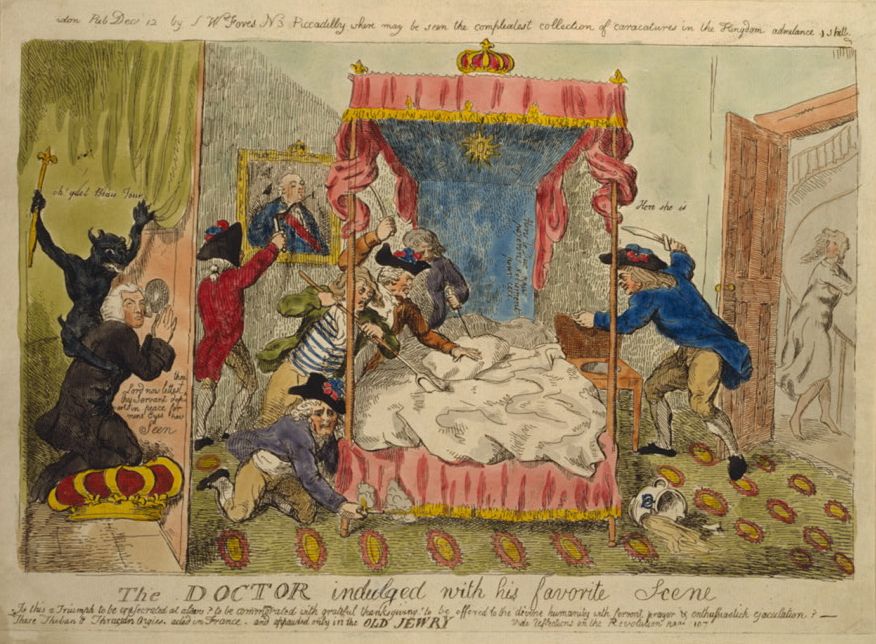
Republican cleric Dr. Richard Price spying on Marie Antoinette at Versailles as she is assailed by ruffians. Isaac Cruikshank, c.1790. Courtesy Library of Congress.
The Regency era was one of great paranoia and suspicion. Britain was at war with France, and Ireland was a hotbed of rebellion. So this was a busy time for the government’s spies on the domestic front as well as abroad.
Rebels knew that their mail was likely to be intercepted, so they went to great lengths to circumvent the authorities. Assuming an alias was an obvious trick. Messages between groups were conveyed face-to-face, or letters were sent by trusted couriers. In the late 1790s, it was reported that at least one dissident Irishman took secret messages from England to Ireland using a secret compartment in one of his shoes. The letter was placed in the cavity, and covered in strong paper to protect it. Then the sole of the shoe was sewn back on again. Continue reading